Palos chapter v1.2 self-contained media build
Fe The Traveler - The CrossingsMeridian
House
Destination Chapter 03 · Spain · September–October 2026

Palos de la Frontera

What does it take to turn a vision into a crossing?

Walking into the chapter.
A measured pace through Palos.
Footsteps that lead toward departure.
La Rábida Monastery

It is said that when we pray, we should pray for five things. Christopher Columbus must have prayed for them all.

There are places where history happened. And then there are places where something that had not yet happened began to seem possible.

La Rábida Monastery is one of those places.

In 1485, Christopher Columbus arrived here with his young son Diego after the Portuguese crown had rejected his proposal to reach the Indies by sailing west. He had an idea.

What he did not yet have was a way to make it happen.

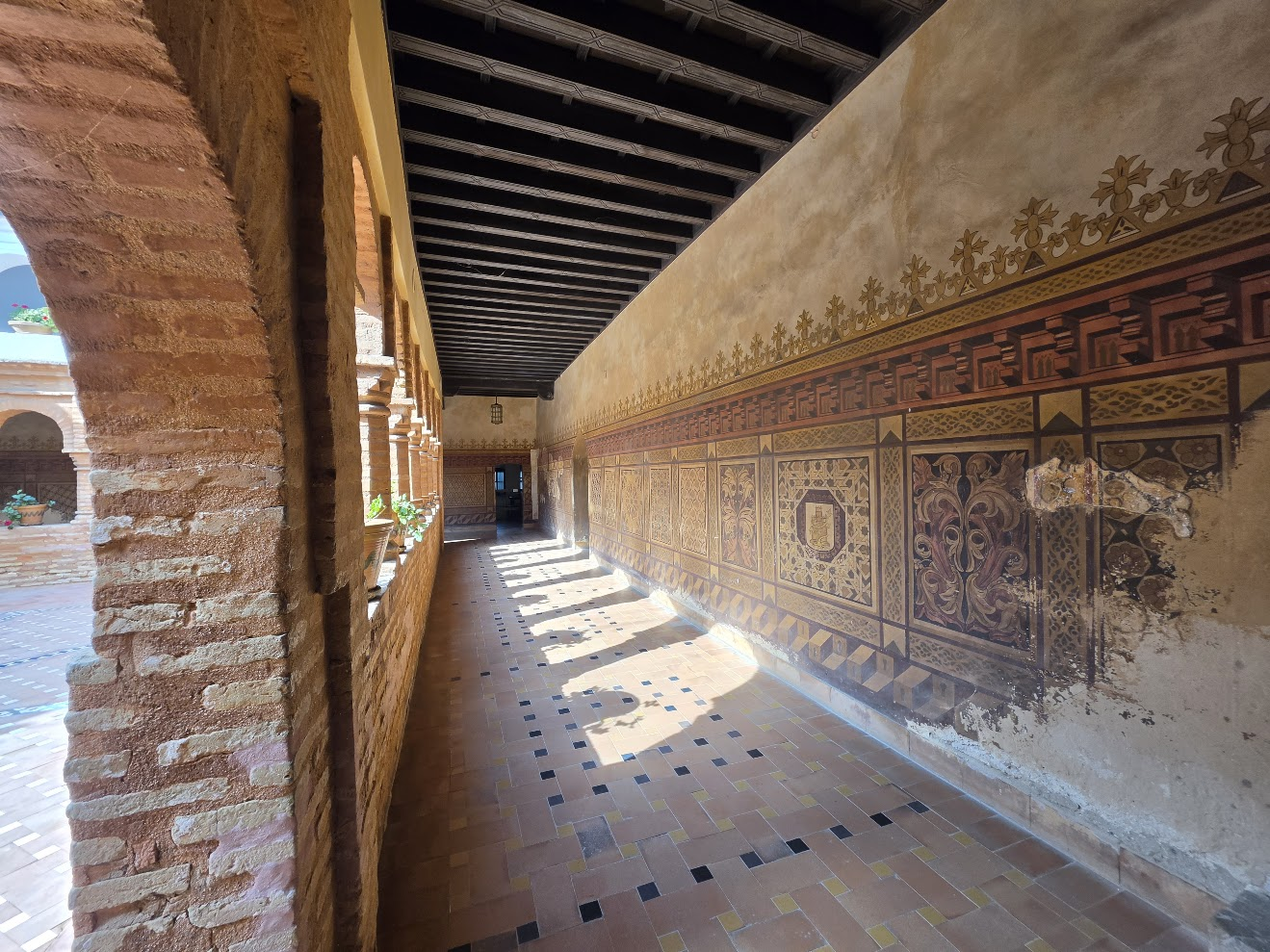
A corridor at La Rábida Monastery.
Vision

Vision got him to La Rábida.

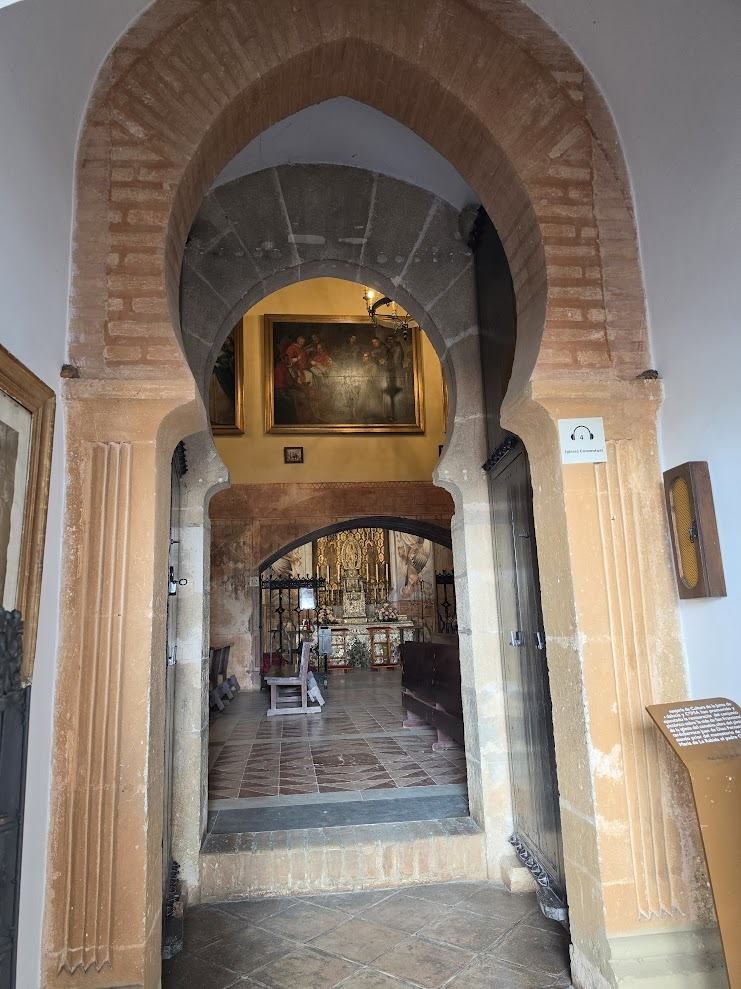
Historic door at La Rábida Monastery
Historic door at La Rábida Monastery. Photo: José Luis Filpo Cabana, CC BY 3.0, via Wikimedia Commons.

Columbus had already heard no.

Still, he came.

He believed a westward crossing could provide another route to the Indies. At La Rábida, the idea that had traveled with him began to encounter something it desperately needed:

other people.

I understand something about an idea that refuses to go away.

The first time I came to Andalucía was in 1990. I remember stepping onto the tarmac in Madrid and feeling something rise through my body.

I've been here before.

I hadn't.

But ten days in Andalucía opened something I would spend years trying to understand. I knew I wanted to write about it.

More than three decades later, I came back carrying The Crossings.

Some ideas take their time.

Wisdom

Wisdom helped him listen.

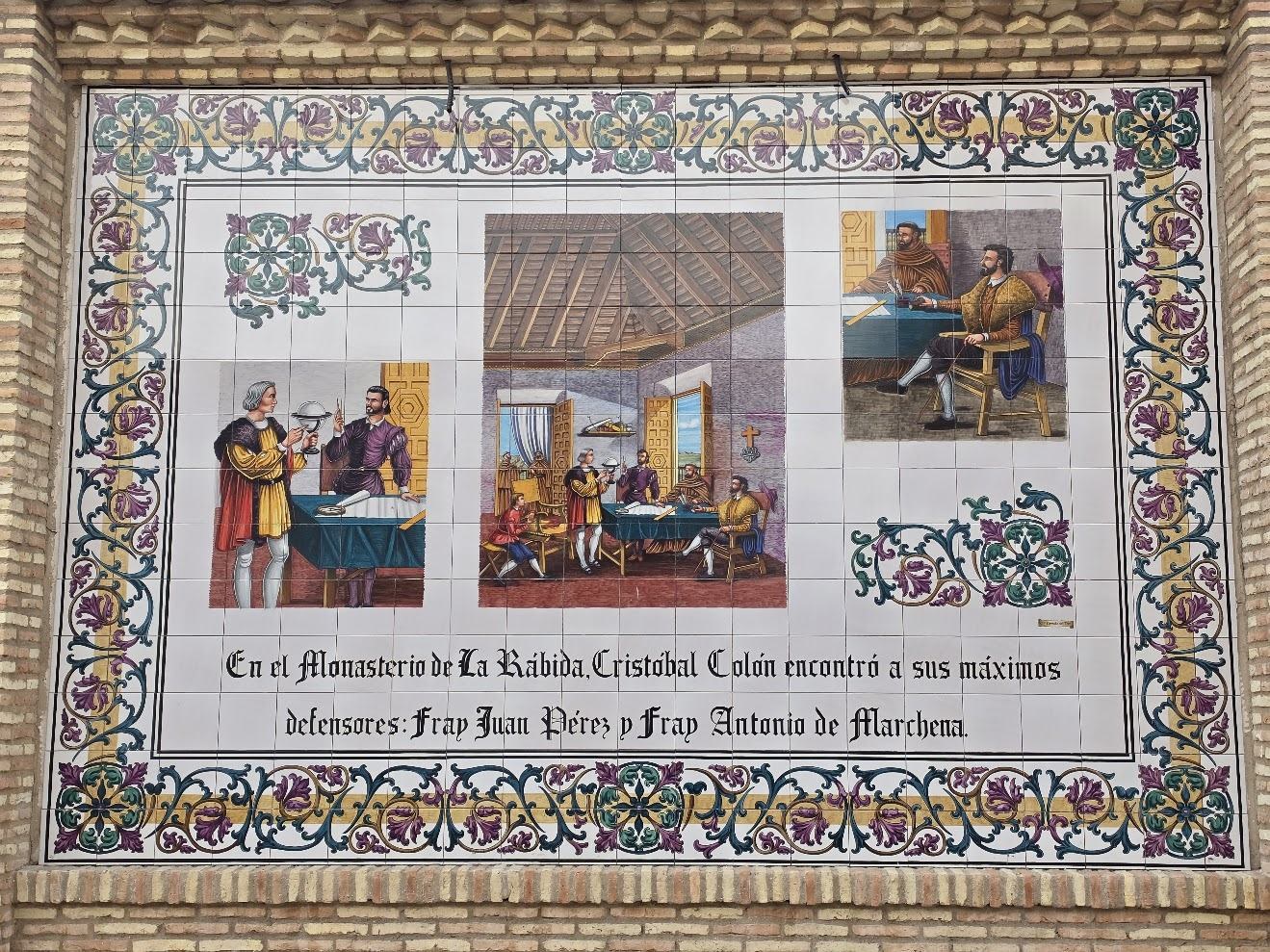
At La Rábida, Columbus found Franciscan friars whose importance had little to do with ships.

Fray Antonio de Marchena understood cosmography. Fray Juan Pérez understood people—and had connections to the court.

They listened. They advised. They helped Columbus navigate a world he could not navigate alone.

Fray Juan Pérez and Fray Antonio de Marchena.
Vision may tell you where you want to go. Wisdom can tell you how to get there.
Favor

Favor opened doors.

The La Rábida audio tour describes Columbus at this stage in startlingly simple terms:

He was a nobody.

That did not change overnight.

Introductions led to audiences. Audiences led to more waiting. Columbus first presented his project to the Catholic Monarchs in 1486.

January 20.

My birthday.

I smiled when I heard that.

It would take years before he finally secured royal backing for the voyage.

Favor, apparently, can be very slow.

Strategy

Strategy made the voyage possible.

And then came the negotiations.

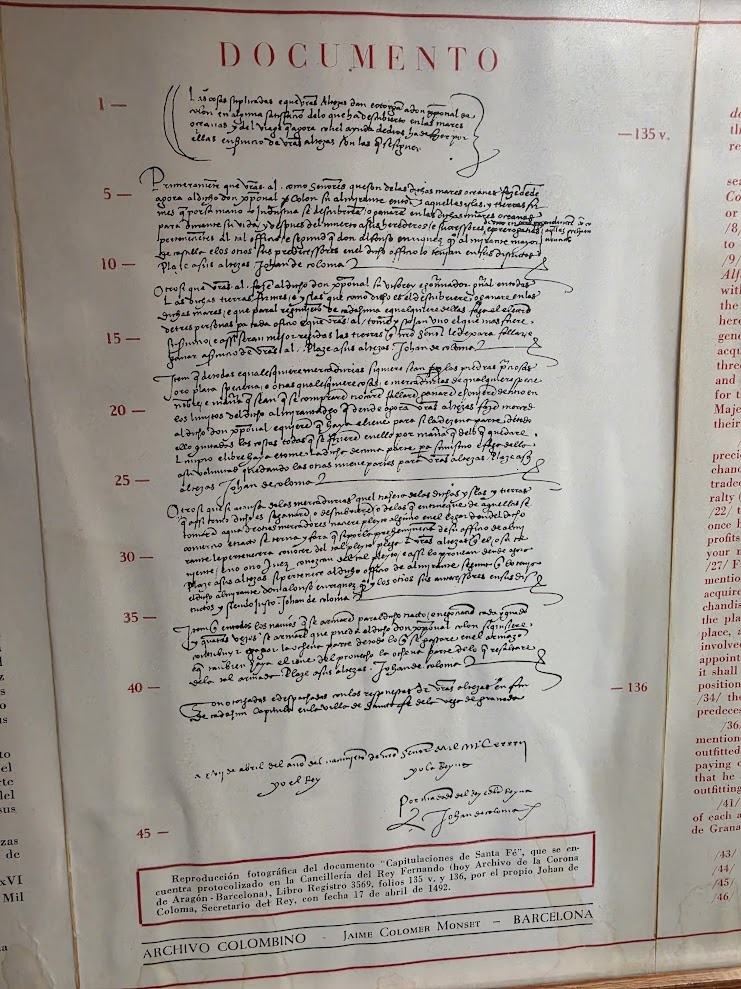
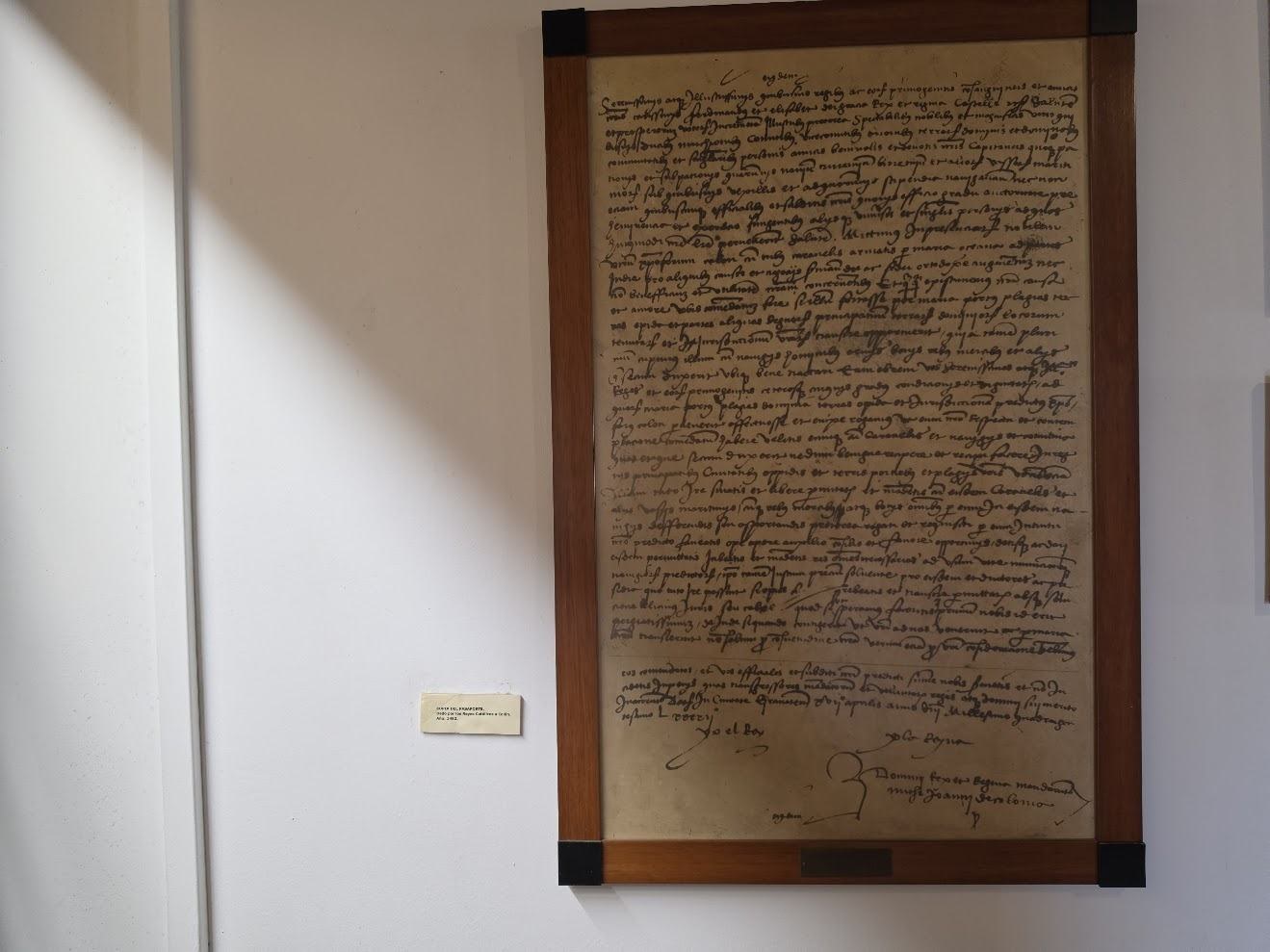
I loved seeing the corrections in the document.

Edits. Changes. Terms reconsidered.

Like any negotiation.

The romantic version of history gives us the dream.

The paperwork gives us the deal.

The agreement—with revisions still visible.
Royal authorization for the voyage.

Permissions had to be issued. Ships had to be assembled. Supplies had to be gathered. Crews had to be recruited.

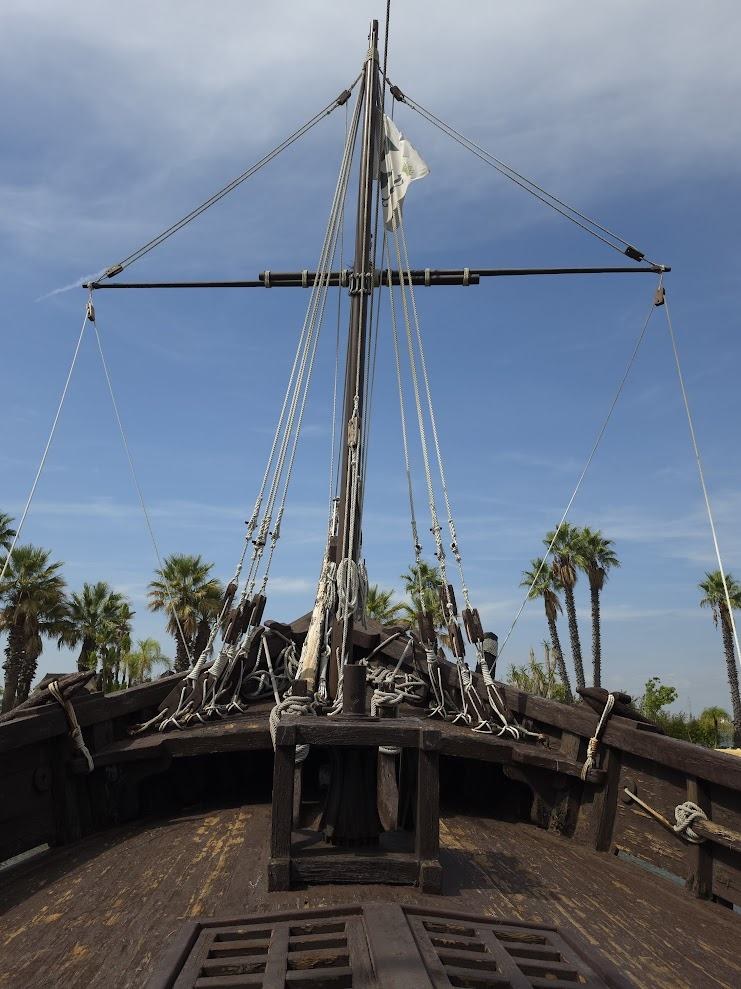
The stern of the Niña, the smallest vessel in the fleet.
People

People put the ships in motion.

One thing becomes apparent almost immediately in Palos de la Frontera:

the Pinzóns are everywhere.

On walls. In mosaics. In monuments. In the visual memory of the town.

Martín Alonso Pinzón commanded the Pinta. His brother Vicente Yáñez Pinzón commanded the Niña. Their maritime experience, influence and local connections helped turn an authorized project into an actual voyage.

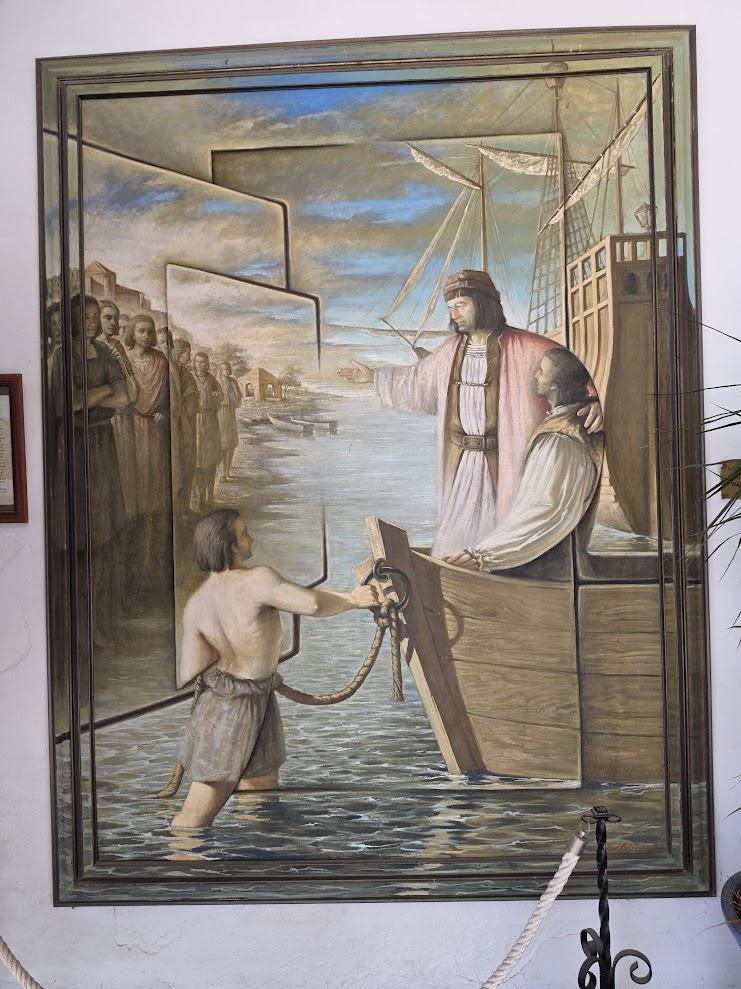
Colombus recruiting men to go.
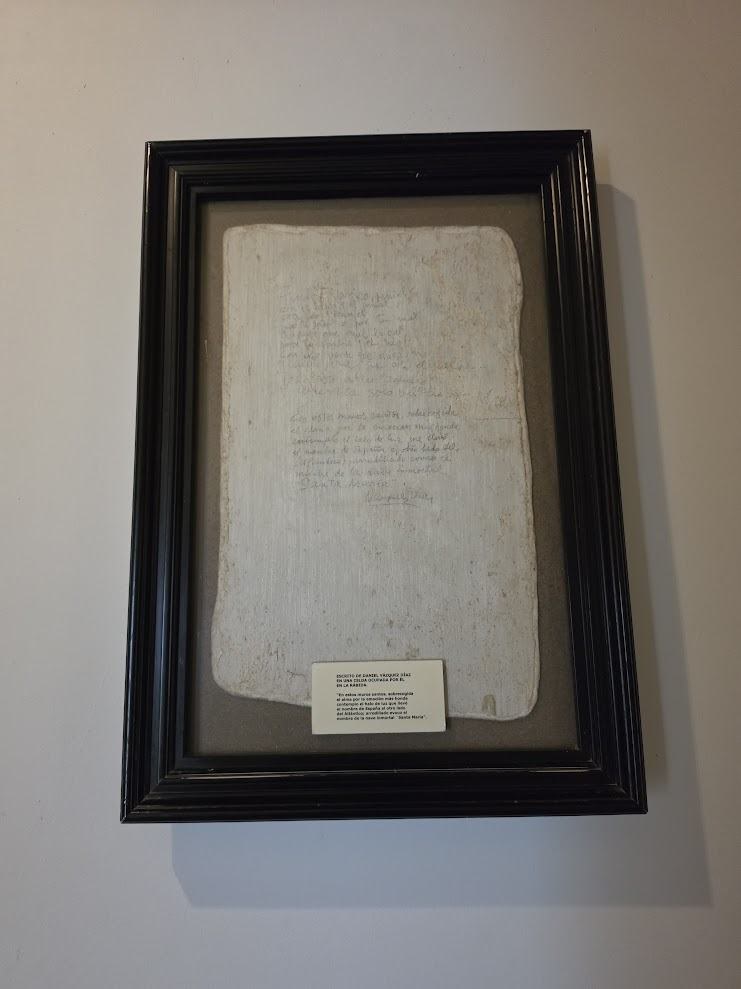
Words preserved at La Rábida Monastery, connected with the recruitment story.

But captains were not enough.

Somebody had to get on the boats.

Mariners. Villagers. Working men. People with families, ambitions, debts, convictions, fears—or perhaps simply very few better options.

In a region marked by conversion, expulsion, concealment, I could not help wondering who among them carried layered identities of their own.

We may never know.

But whatever brought them there, the crossing depended on them.

Columbus did not need perfect believers.

He needed enough men willing to get on the boats.

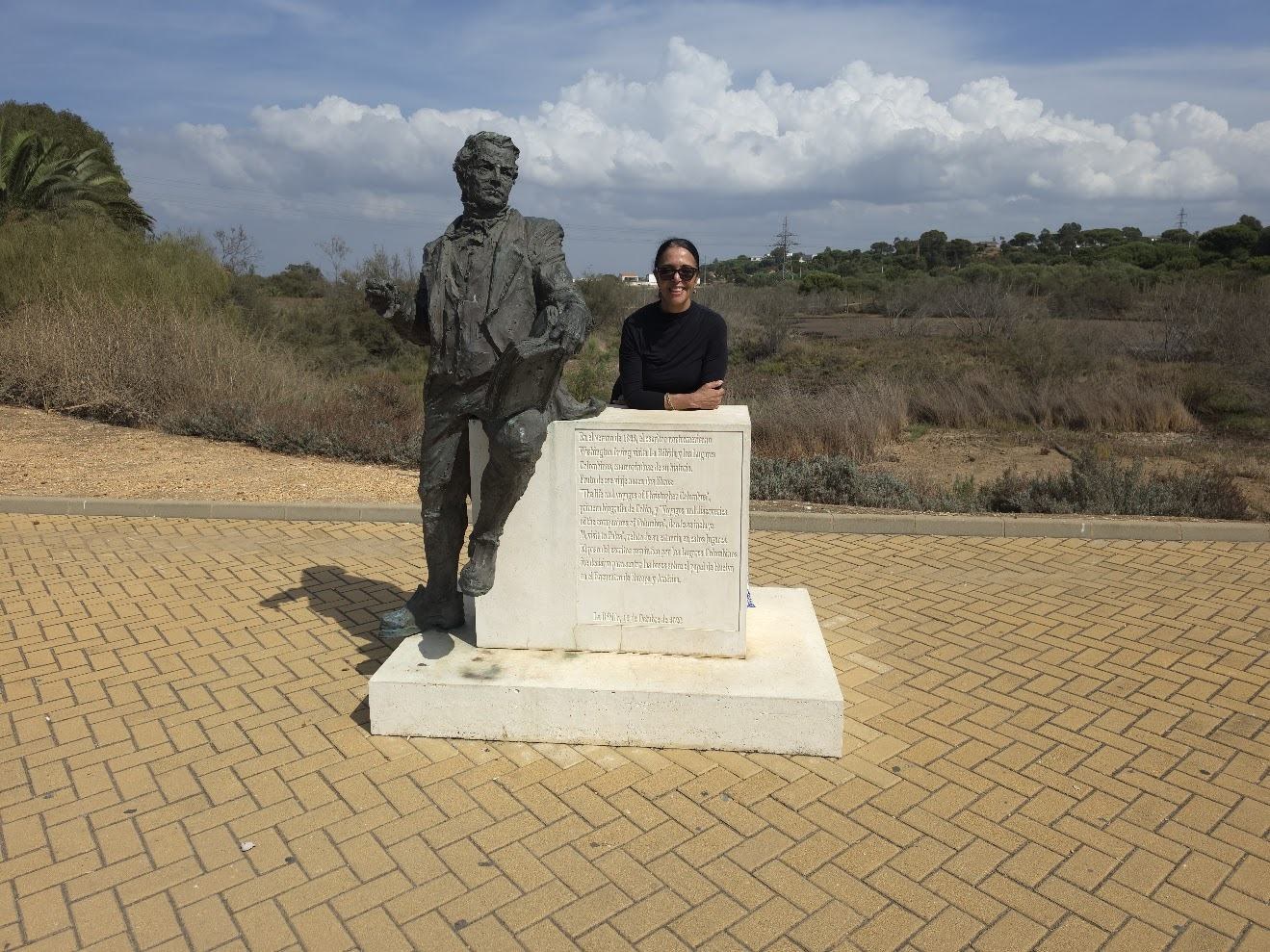
An American comes looking, too

Washington Irving understood the pull.

Long before I came looking, another American was fascinated by this place.

Washington Irving wrote about Columbus and visited La Rábida himself. His writing helped return the monastery and its connection to Columbus to the public imagination.

I understood the pull immediately.

Washington Irving, whose A History of the Life and Voyages of Christopher Columbus (1828) rekindled the public imagination, casting Columbus as a daring navigator whose vision changed the course of history.
A story I had met before

Columbus was not entirely new territory for me. Years ago, while writing Adventure Guide to the Dominican Republic, I wrote extensively about Columbus and Santo Domingo, the city established by his brother Bartolomé.

Standing at La Rábida, I was encountering that story from the other side of the Atlantic.

Find Adventure Guide to the Dominican Republic on Amazon →
Departure · August 3, 1492
Vision got him to La Rábida.
Wisdom helped him listen.
Favor opened doors.
Strategy made the voyage possible.
People put the ships in motion.
Then, on August 3, 1492, they left.
Some departures keep moving long after the shore disappears.
Research Notes & Source Cautions

These notes distinguish personal observation, recorded conversations, museum interpretation and historical reference. A field photograph records what was visible during the visit; a caption or display does not by itself establish every claim about the past.

Field record

The chapter draws on Fe Bencosme’s September–October 2026 photographs, video, personal recollections and the La Rábida Monastery audio tour. Statements attributed to the audio tour are interpretive field sources.

Historical context

The voyage departed in 1492. References to regional conversion, concealment and expulsion concern different communities and periods. Questions about the identities of individual crew members are reflections, not established biographies.

Source cautions

Washington Irving’s A History of the Life and Voyages of Christopher Columbus (1828) helped shape Columbus’s popular image. Its romantic treatment should be distinguished from contemporary voyage records. The chapter’s personal comparison between an idea and its realization is a narrative interpretation.

Reference sources

UNESCO · Monastery of Santa María de La Rábida and the Columbus Memorial Places in Huelva is a Tentative List submission, not an inscription on the World Heritage List.

Media & credits

The monastery-door photograph is by José Luis Filpo Cabana, licensed CC BY 3.0 via Wikimedia Commons. Existing credits and captions remain beside the corresponding images.